


Safest Deposit Methods for Online Betting Sites in Kenya: M-Pesa & Airtel Money
safest deposit methods · mobile money deposits in Kenya · M-Pesa betting deposits · Kenya-Friendly Guide · Updated for 2026
Choosing among the safest deposit methods available to Kenyan bettors comes down to one habit most players skip: checking who actually holds your money between your wallet and the operator. Mobile money deposits in Kenya route through Safaricom or Airtel’s own systems before the funds ever touch a betting account, which is why they carry less exposure than a saved card number sitting on a foreign server. M-Pesa betting deposits settle in seconds through a paybill number tied to a licensed entity, not a third party. That said, speed does not equal zero risk — SIM-swap fraud and fake paybill scams both target mobile wallets specifically. This guide breaks down the real limits, the real fraud numbers, and the checks that separate a safe deposit from an expensive mistake.
Whether you are playing from Nairobi, Mombasa, Kisumu, Eldoret, or anywhere else in Kenya, the deposit method you pick decides how fast your money moves and how exposed it is if something goes wrong. This in-depth guide from one of the leading sports betting sites explains M-Pesa and Airtel Money limits, how KYC verification protects a deposit, what the fraud statistics actually say, and how to spot a fake paybill before you send anything in 2026.
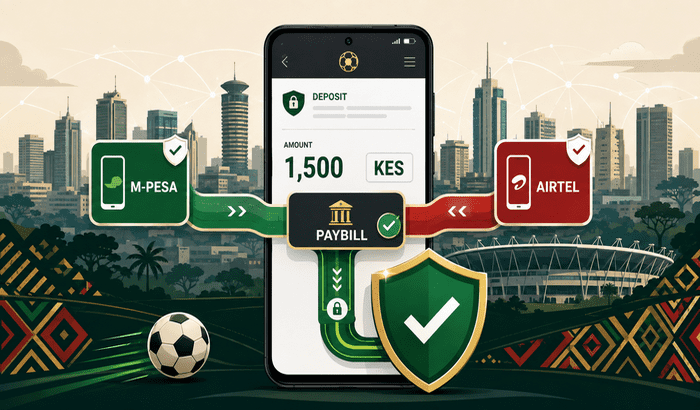
How Mobile Money Deposits Actually Work at Licensed Kenyan Betting Sites
When you deposit through M-Pesa or Airtel Money, you are not sending cash to the betting site directly — you are paying a paybill or till number registered to that operator, and Safaricom or Airtel confirms the transaction back to the operator’s system. This is why deposits often land in under a minute: there is no card network sitting in the middle. The limits below come straight from Safaricom and Airtel’s 2023 Central Bank of Kenya-approved caps, still in force through 2026.
📱 M-Pesa vs Airtel Money: The Numbers That Matter
⚠️ These are standard consumer caps approved by the Central Bank of Kenya in 2023 and unchanged through 2026 — agents can occasionally apply lower limits at the till, so confirm before a large top-up.
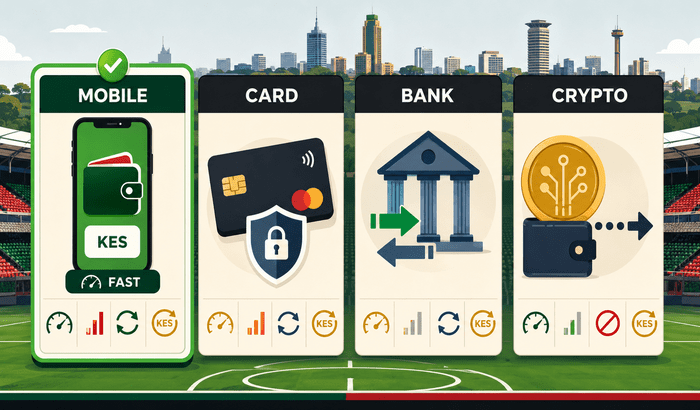
Comparing Deposit Methods: Mobile Money vs Cards vs Bank Transfer vs Crypto
Mobile money isn’t the only option on licensed Kenyan sites, but it wins on the two things that matter most for safety: speed of settlement and how little of your financial data the operator actually sees. Here’s how the main methods stack up for a Kenyan bettor depositing in KES.
Before picking a method for a specific deposit, run through this quick check:
- Is the paybill or till number listed on the operator’s own official page, not a screenshot shared elsewhere?
- Does the deposit amount fall comfortably under your daily M-Pesa or Airtel Money limit?
- Have you set a personal deposit limit in your account settings before topping up?
- If using a card, is the checkout page on the operator’s own domain, not a redirect to an unfamiliar processor?
Deposit Safety in Numbers: Fraud Risks and How KYC Protects You
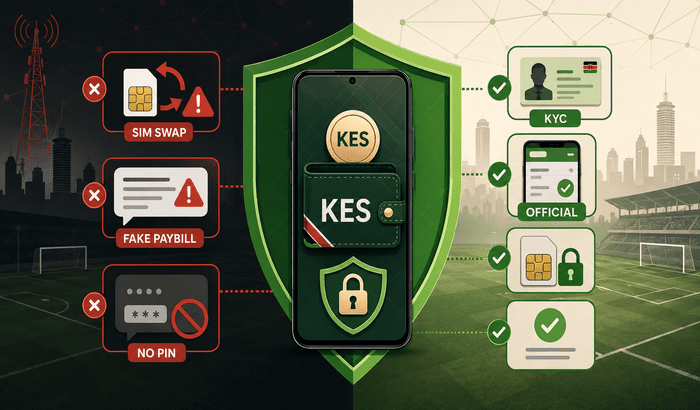
Mobile money fraud is a real, growing problem in Kenya — but the numbers point at SIM control and social engineering, not a flaw in M-Pesa or Airtel Money’s payment rails themselves. Knowing where the actual risk sits changes what you should guard against.
🔍 Where the Risk Actually Sits
⚠️ Fraud figures come from 2025-2026 telecom and regulatory reporting cited above — treat them as the current trend, not a fixed statistic, since both providers update security measures regularly.
How to Deposit Safely via Mobile Money in Kenya
Licensed Kenyan operators are required to verify identity before releasing winnings, and increasingly at deposit stage too, under the registration and KYC process covered by BCLB rules. That verification is the single biggest safety net a mobile money deposit has — it ties your wallet, your identity document, and your betting account together so a stolen SIM can’t quietly drain an account under someone else’s name.
🛡️ Red Flags to Check Before You Send Money
- A paybill number that only appears in a Telegram group or comment section, never on the operator’s own site.
- Pressure to deposit “right now” for a bonus that expires in minutes — a classic urgency trick.
- Any request for your M-Pesa PIN, OTP, or full ID number “to verify the deposit.”
- A deposit confirmation SMS that doesn’t match the amount or paybill you actually entered.
Beyond fraud checks, responsible play matters just as much as payment safety. Set a personal deposit limit in your account settings before your first top-up, use session timeouts if you find yourself playing longer than planned, and treat how quickly you can withdraw as a safety signal in itself — an operator that pays out fast and predictably is usually the one handling your deposits properly too.
🔗 Read next on Gambling24
Crypto betting in Africa using USDT and Bitcoin — a look at the alternative to mobile money if you already hold digital assets.
Top betting sites accepting mobile money (MTN, M-Pesa) — where these deposit methods are actually supported.
Best welcome offers for new betting users in Kenya — check the wagering terms before a bonus-linked deposit locks up your funds.
Frequently Asked Questions About Deposit Safety in Kenya
Pick from the safest deposit methods, confirm the paybill directly on the operator’s site, and let mobile money deposits in Kenya do what they do best — fast, KES-native, and traceable. M-Pesa betting deposits stay safe as long as the checks above become habit, not an afterthought.
18+ · Gambling involves risk and is not a way to earn income. Bet only what you can afford to lose and never chase losses. Betting and gaming in Kenya are regulated by the Betting Control and Licensing Board (BCLB) — play only with licensed operators. If gambling stops feeling like entertainment, use the deposit limits, timeouts, and self-exclusion tools your operator provides, or seek support from a professional service. Odds, bonus terms, and promotions mentioned here can change at any time — always confirm the current terms on the operator’s site.